Showing posts with label great blue heron. Show all posts

Sunday, November 29, 2009

Berry Pond - Lake George

I came across an article today in the online edition of the PostStar about the Lake George Land Conservancy receiving a grant to continue its efforts at the Berry Pond Preserve, which was acquired by the LGLC in 2008, and towards the Last Great Shoreline Protection Project of 2009.

This article reminded me about my quest to find Berry Pond this summer. I had heard of the recent acquisition by the LGLC and wanted to check out the pond. I explored the trails at the recreation park in Lake George with a coworker who had somewhat of an idea as to where the trail would start. With our cameras, and her grand-dog, map and compass, we went on our search. The wooded trail eventually ended at a dirt road which we continued to follow, wondering if we were even on track the whole time.


We finally conceded to the fact that we were not going to find the pond, but were content with checking out the wild flowers and playing fetch with the dog. At the sight of a possible clearing, we decided to take a side road off the road that we were on, and we came to what we figured must be Berry Pond.


At the pond was a great blue heron and a beaver dam, surrounded by swampy soft ground and plenty of evidence of beaver activity. I hope I can remember how we got there so I can find it again!


Sunday, June 22, 2008

The Gull Bay Preserve: Blue Heron Rookery

I love it when I find fun things to see in my area that I didn't know existed...

My sister and I ditched our plans of a repeating a small local hike to join a friend at the Gull Bay Preserve on a guided tour to the Blue Heron Rookery, a local attraction that we didn't even know existed. We were so glad we had the opportunity to check it out! The Gull Bay Preserve is located in Putnam, New York and overlooks the Southern end of Lake George. I recommend checking it out if you are local, or if you plan on vacationing in the Adirondacks. Or perhaps you have a Blue Heron rookery (nesting colony) near you.

The Gull Bay Preserve was purchased in 2003 by the Lake George Land Conservancy, making a great conservations success. Throughout the Preserve there are old logging roads and two wetland swamps representing the southern end of Sucker Brook, one of the most important wetlands in the Lake George watershed.


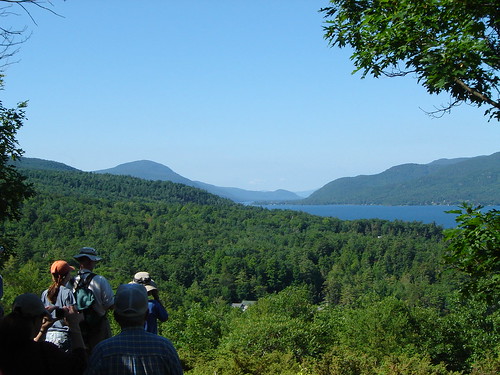
Our guided tour of the Gull Bay Preserve began from the parking lot, uphill for 0.3 miles to a lookout area over the southern end of Lake George, Gull Bay, and Black Mountain.


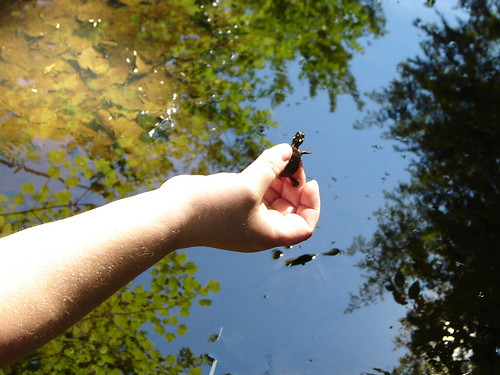
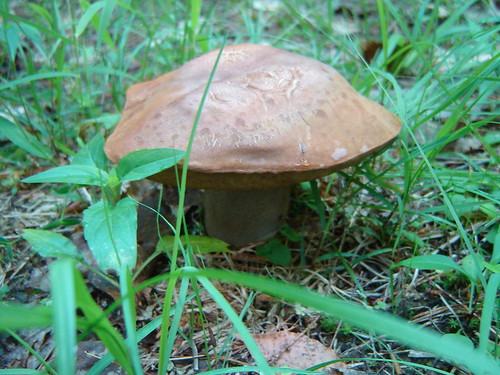
We followed the trail 1.4 miles to the rookery. Along the way we saw vernal pools, mushrooms, flowers, newts, frogs, and much more. ATVs are strictly forbidden on the trail, as they can damage the wild life.

A Painted Turtle


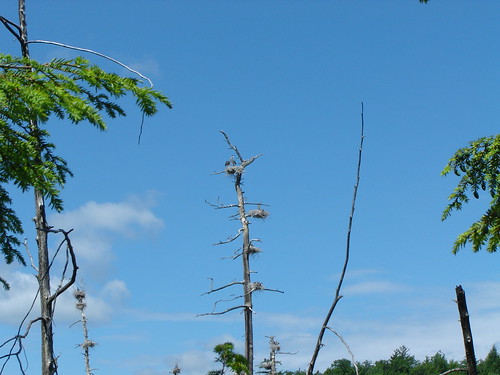
Upon arriving at the rookery, we were instructed to lower our voices as not to scare the blue heron. If they are disturbed they could leave to set up their colony elsewhere. Besides, human disruption can negatively affect their reproduction. A couple bull frogs provided song as we bird watched, observing several nests, many of which were inhabited. Every once in a while, a heron would make its call, a deep throaty noise, almost as if it were coughing. Below is a poor quality video I took. You can hear the bull frogs, and some fellow hikers. You can see the heron moving in their nests, but no bird calls.


There are about 30 nests in the rookery. In April, blue heron eggs are laid and incubated by both parents for 28 days. Eight weeks after hatching, the young birds learn to fly. By 10 weeks they take off and become independent. Blue heron live near water, in this case the wetlands. They feed off of fish, frogs, insects, and sometimes small birds. They are the largest species of heron in North America. They have a head to tail length of 36-54 inches and a wingspan of 71 inches (about 10 inches longer than I am tall!) They typically weigh 4.8- 8 lbs. They are an important species, as their presence indicates high water quality, and its essential to maintain the water quality of the watershed.


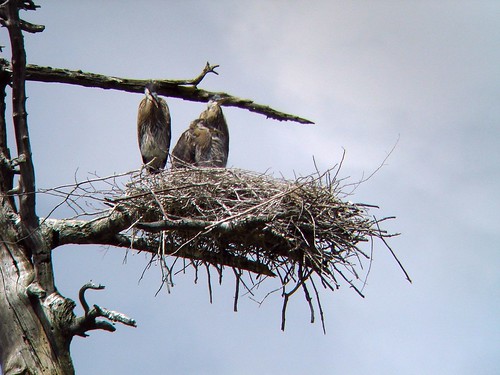
A kind hiker that was not with our tour group brought a telescope and set it up, allowing all of us to look through it. His generosity was greatly appreciated by all. My camera did not have the ability to get a clear zoom image of the birds, but through the telescope I was able to catch the photo below.


To see all my pictures from the Preserve, click here.

If interested, check out their website for more information and for contact numbers. They close certain trails for a couple of months starting in April, which are their nesting months, so it is wise to call ahead to make sure that you will be able to see the heron.

Information from:
www.lglc.org/NaturePreserves/Gull-Bay.as p
en.wikipedia.org/wiki/Great_blue_heron